DUSTBIN DIVING
THE NEFF ZONE -- BY JIM NEFF
CADILLAC NEWS -- MARCH 7, 2026
In today's fast-paced world we have a tendency to banish some things to the dustbin of history. Items are easily doomed to be forgotten or ignored by humanity. However, diving into this dustbin can reveal some interesting discoveries.
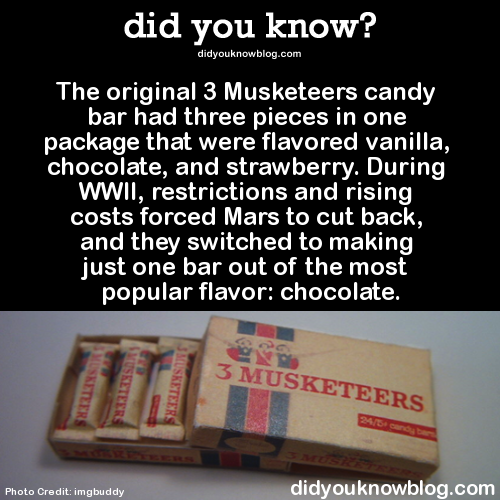
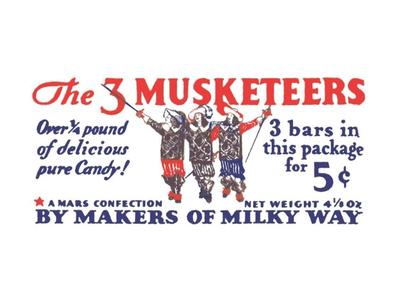
For example, did you know that the Three Musketeers candy bar is actually only One Musketeer? “The treat made its first appearance in 1932. At the time, each 5-cent package contained three bars with three different flavors: chocolate, strawberry, and vanilla.”
Then came WWII. In 1942, government-mandated sugar rationing went into effect. When regular production resumed in 1945, Three Musketeers was reduced to just one piece, available in just one flavor: chocolate. But despite the lower bar count, the name remained the same.” (https://historyfacts.com/arts-culture/fact/the-3-musketeers-candy-bar-was-named-for-its-flavors/)
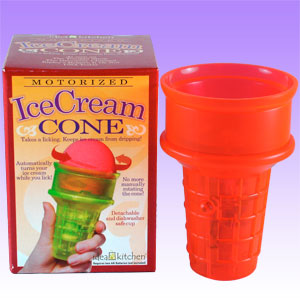
Three Musketeers is still popular, but another food-related invention from the 90s did not fare as well. The motorized ice cream cone never caught on. “This battery-powered cone featured a small motor that rotated the ice cream for you, so you could just stick out your tongue and let technology do the rest. The invention raised an important question: had we become so lazy that rotating our wrist was now an insurmountable challenge? Apparently, the answer was no. The motorized cone disappeared faster than ice cream on a summer day.” (https://www.dictionaryscoop.com/article/People-once-caged-babies-several-stories-above-the-street)
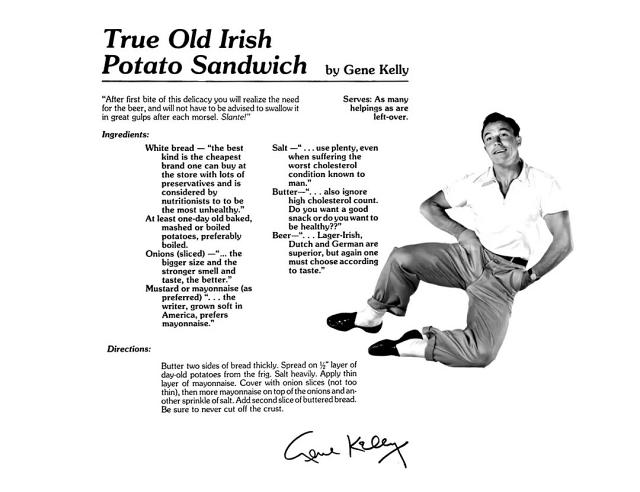
Sometimes food-related memories come from unexpected places. Older folks will remember Gene Kelly. “He was a multi-faceted star—director, singer, dancer, actor, and choreographer all in one. He helped redefine the Hollywood musical with his athletic, grounded performance style. if you had to sum up all those characteristics into a single recipe, it might be his favorite sandwich..”
The recipe for his “True Old Irish Potato Sandwich” has appeared in several cookbooks. “Take two slices of fresh French bread and butter thickly. Take yesterday's left over mashed potatoes and spread on bread as thickly as your mouth can get around. Salt and pepper heavily. Add thin slices of red onion, or white onion, then your favorite mayonnaise. Salt and pepper again. Put under broiler and brown. Reach for the nearest mug of beer, it's heavenly." See the recipe at: https://www.aol.com/articles/gene-kellys-true-old-irish-220000594.html.
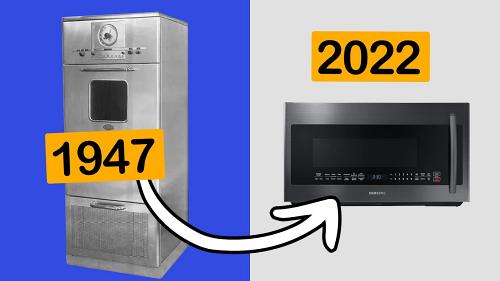
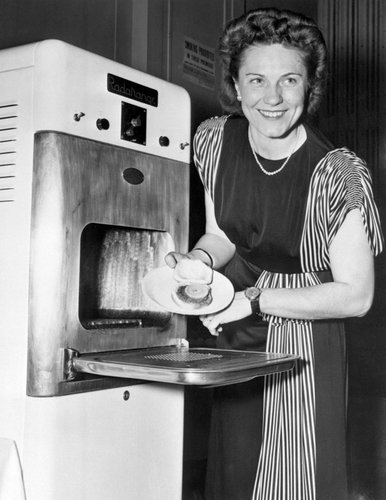
Some might opt to heat Kelly's sandwich in a microwave, but that would not have been an option when this (now common) appliance first appeared. In 1945, the Radarange, as it was known, was 6 feet tall, weighed 750 pounds, and cost about $5,000 (the equivalent of more than $75,000 today). At first, the product was marketed to and adopted by only commercial kitchens. It wasn’t until the 1967 debut of the Radarange RR-4, a countertop model with a price tag of $495, that microwaves made their way into home kitchens.” (https://historyfacts.com/science-industry/fact/the-first-microwave-ovens-were-about-6-feet-tall/)
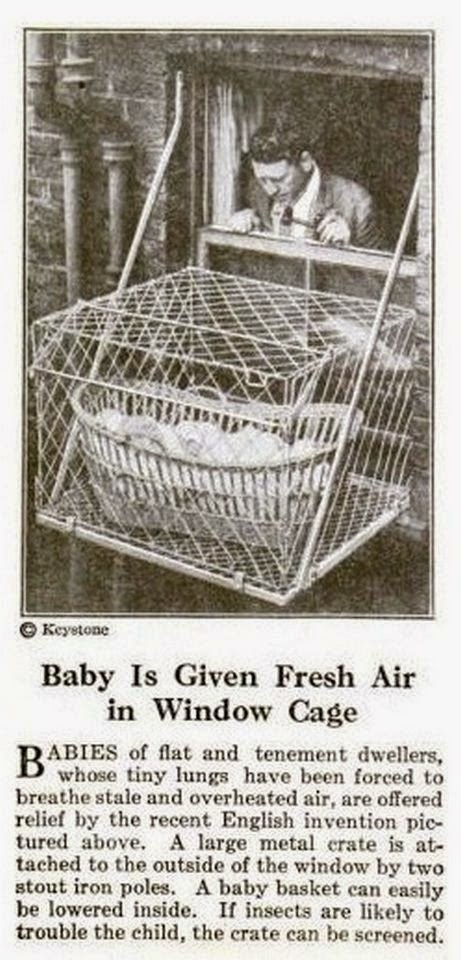
Microwaves are an invention that has become pretty ubiquitous in today's homes, but another item from the past has (thankfully) disappeared – baby cages. “Back when fresh air was considered a cure-all, London parents who lived in apartments faced a dilemma: how to give their babies outdoor time without a yard? The solution was a wire cage that hung outside the window, suspending Junior several stories above the street. Parents would just pop the baby in the cage and go about their day.”
There was some odd reasoning behind this. “Dangling baby cages really began with the 1884 book 'The Care and Feeding of Children' by Dr. Luther Emmett Holt. He said: 'Fresh air is required to renew and purify the blood, and this is just as necessary for health and growth as proper food.' Essentially, the thinking was that this was part of a process to toughen up the babies, and make them better able to withstand common colds.”
Well, the practice of dangling infants did not last too long. “It’s not entirely clear when exactly the baby cage’s popularity began to wane, but it likely had something to do with growing concerns for child safety in the second half of the 20th century.” See many images at: https://rarehistoricalphotos.com/history-baby-cage-1934-1948/.
Finally, on March 17-18 the men's and women's NCAA Basketball Tournaments begin. However, the term “March Madness” was not always used to describe the tourneys. “March Madness was first used to refer to basketball by an Illinois high school official, Henry V. Porter, in 1939, but the term didn’t find its way to the NCAA tournament until CBS broadcaster Brent Musburger used it during coverage of the 1982 tournament. The term has been synonymous with the NCAA basketball tournaments ever since.” (https://www.ncaa.com/news/basketball-men/article/2025-06-10/march-madness-history-comprehensive-guide-mens-tournament)
Another common term is also fairly new – slam dunk. “Legendary play-by-play announcer Chick Hearn was the first to coin the phrase. Hearn first used the slang term while announcing an Los Angeles Lakers game in 1972. Hearn would further make a play on the slam dunk with his signature 'Slaaaaaaaaam Dunk!' call. Prior to Hearn’s 'Chickism' of the dunk, slam dunks were simply called dunk shots.” (https://www.interbasket.net/news/who-invented-the-slam-dunk-history-behind-the-dunk/7722/)
Our state is a part of a unique piece of tournament history. “The highest scoring game in NCAA tournament history came on March 18, 1990, when Loyola Marymount beat Michigan by a final score of 149-115 to total 264 points.” Apparently, defense in this game was not a priority.
Jim Neff is a local columnist. Read NeffZone columns online at CadillacNews.com and NeffZone.com/cadillacnews.